
Technical Guidance & Consultation for Natural Gas Systems
Expert help with natural gas meter sizing, pressure regulator troubleshooting, product selection, and system design — from a team that's been advising the industry since 1968.
Expert help with natural gas meter sizing, pressure regulator troubleshooting, product selection, and system design — from a team that's been advising the industry since 1968.
Natural gas products are not simple. Pressure regulators, meters, and instrumentation each involve technical variables that interact with each other — system capacity, maximum allowable operating pressure (MAOP), elevation, correction factors, flow rates, and more. Getting the right product for your specific application isn't a lookup exercise; it's an engineering conversation.
When you call Holland Supply with a technical question, you'll reach someone who has been trained specifically to have that conversation. We don't route you to a general customer service queue. We connect you with a knowledgeable technical advisor who wants to understand exactly what you're working with — your application, your system parameters, and what you're trying to achieve — before offering any recommendation.
This approach matters because the wrong product recommendation doesn't just waste money. In natural gas systems, it can create safety risks, compliance issues, and operational failures that are far more expensive to fix than getting the selection right the first time.
Technical expertise isn't something you pick up in a week. It accumulates over years of product exposure, field experience, and deliberate training. Holland Supply has been working with many of the same core product lines for over 50 years, and we've built a formal training program to ensure every technical advisor on our team operates at a consistently high standard.
Every new Technical Sales Representative goes through a structured 80-hour onboarding program that includes classroom instruction, hands-on product training, practical testing, and one-on-one mentorship covering industry norms and best practices. That onboarding isn't the end — each new advisor then works alongside an experienced accountability partner for a minimum of six months to ensure accuracy in product selection before advising customers independently.
Beyond onboarding, anyone in our organization who advises customers is required to complete at least 30 hours of additional training annually. This can come through industry conferences, virtual seminars, certification programs, practical exercises, or by teaching other staff members. We require it because the industry evolves, products change, and we don't want our advisors relying on outdated knowledge.
The result is a technical team that manufacturers themselves occasionally call for product guidance — which tells you something about the depth of knowledge we've developed.
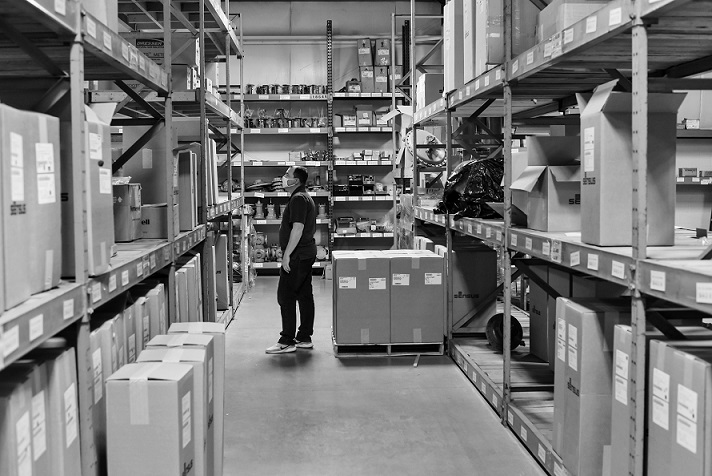
Sizing natural gas meters and pressure regulators is one of the most common and critical services we provide. An undersized meter or regulator can create pressure drops, inaccurate measurements, or unstable system operation. Oversized equipment may operate inefficiently, reduce accuracy, and shorten service life. Either scenario can lead to billing discrepancies, compliance issues, or operational problems.
Correct sizing requires understanding multiple variables simultaneously:
Our team works through all of these variables with you before recommending a meter or regulator. We also ensure compatibility with any AMI, AMR, or remote reading system in your setup, so you avoid purchasing equipment that won’t integrate with your infrastructure.
If you’re replacing existing equipment, we can assess whether the original sizing was correct or if changes in your system require a different specification today. With Holland Supply, you get expert guidance to ensure your meters and regulators are correctly sized the first time, keeping your system safe, efficient, and reliable.
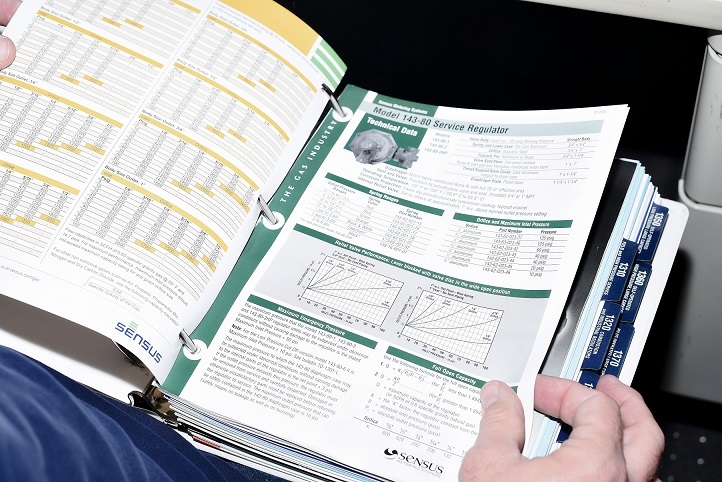
Pressure regulator issues are one of the most frequent calls we receive. Regulators are mechanical devices operating under continuous load, and when something goes wrong — noise, pressure drift, lockup, instability — it can be difficult to diagnose without knowing what to look for. We hear these problems every day, and we're good at helping operators work through them remotely.
Common pressure regulator problems we help troubleshoot:
For pressure regulator troubleshooting, the more context you can provide — the specific model, the inlet and outlet pressures, when the problem started, whether anything changed in the system recently — the faster we can identify the likely cause. We'll walk you through what to check and, if needed, recommend a repair, adjustment, or replacement path.
We can also help with installation guidance for new regulator installations: correct mounting orientation, vent direction and distance requirements, monitor-control set configuration, control line placement, and what accessory products you'll need to complete the install correctly.
Natural gas meter sizing and pressure regulator troubleshooting are our most frequent inquiries, but our technical team handles a much broader range of questions. Common topics include:
If you have a question and aren't sure we can help, call anyway. We'll either answer it or point you toward the right resource.
A water utility received city council approval to expand its operations and begin offering natural gas service to its community. The challenge: the utility had no background in natural gas infrastructure, no existing relationships with suppliers, and no internal expertise in product selection.
They called Holland Supply.
Our team guided them through the entire system design — product by product, from the distribution tap to the point of consumption. This included selecting the right pressure regulators for each pressure stage, specifying meters appropriate for the expected load at each service point, and choosing instrumentation to monitor and protect the system. We explained not just what products to use, but why each selection was appropriate for their specific operating parameters and customer base.
The utility also wanted to modernize their meter reading operations from the start, so we walked them through their options for remote reading — AMI and AMR systems, communication protocols, and how different solutions would interact with their billing and utility management software.
Today, this utility relies on Holland Supply as an ongoing technical resource as they continue to build out and operate their gas system. They have confidence that the products they're receiving are correctly specified, that they'll perform as expected, and that when they have a question — about meter sizing, regulator behavior, or anything else — they have an expert to call.
For product selection and application guidance related to products we supply, our technical consultation is provided as part of the service — no separate consulting fee. We invest in the technical depth of our team because we know that well-advised customers end up with products that actually work for their application, which benefits everyone.
The more you can tell us upfront, the faster we can help. Useful information includes your maximum and minimum flow requirements, inlet and outlet pressures, gas type and specific gravity, installation elevation, and whether you need compatibility with any AMI/AMR systems. If you don't have all of this, call anyway — we can walk you through what you need to gather.
Regulator noise most commonly points to one of a few issues: the regulator may be oversized for the application, causing it to operate in an unstable range; there may be a velocity problem in the piping immediately upstream or downstream; or there could be a spring or seat issue. Call us with the model number, your inlet and outlet pressures, and a description of the noise (humming, chattering, pulsing) and we can help narrow it down quickly.
Our primary focus is on customers who purchase through Holland Supply. That said, if you call with a genuine technical question, we're not going to turn you away. We'd rather help and earn your business on the next project.
Call (740) 549-6550 during business hours (Monday–Friday, 8 AM–5 PM ET). A real person will answer — no phone menu, no callback queue. You can also reach us at sales@hollandsupplycompany.com.